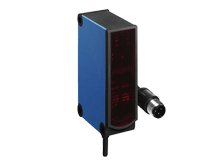
SICK: WL27-3 Reflex Array Sensor

Low-Cost Array Sensor for Simple Light Grid Applications

The Reflex Array photoelectric sensor is designed for reliable leading edge detection of irregular shaped objects, including product with tapered edges, warped boards, and packaged product. This also includes continuous edge detection of multi-height objects, pallets and containers with holes/gaps. Any object 12 mm or larger can be detected with the Reflex Array’s 50 mm detection height, regardless of object properties or position within the array - including clear materials. With these applications, the Reflex Array can displace the traditional approach of small light grids or stacked photoelectric sensors. The WL27-3 Reflex Array provides low cost area detection in a standard sensor platform. Not only is the device priced economically, but further cost savings are realized in installation and commissioning. Operating in a retro-reflective mode results in only having to mount and power a single device.
Features:
- Retro-reflective
- Standard W27 housing
- Push-button teach functionality
- 50 mm detection height
- 12 mm Minimum Detectable Object (MDO)
- 4.5 m sensing range
Benefits:
- 50 mm detection height (array) provides a low-cost option for area detection
- Leading edge detection of irregular shaped objects reduces costs compared to traditional use of multiple sensors or light grids
- Push-button teach with intuitive alignment procedure ensures ideal operating conditions and reduces commissioning time
- Retro-reflective technology reduces installation time and cabling costs because only one device needs to be powered and mounted
Applications:
The array sensor is designed for leading edge detection of irregular shaped objects, including product with tapered edges (totes), bagged product, warped boards, and packaged product. This also includes continuous edge detection of multi-height objects, pallets and containers with holes/gaps. With these applications, the Reflex Array can oftentimes displace the traditional approach of small light grids or stacked photoelectric sensors.