Control Techniques Drives Chosen for High Density Automatic Car Parking in Taiwan

Taiwan's leading builder of high-density car parking systems has chosen variable speed drives from Control Techniques again for its latest automated car parking tower building.
.jpg)
Ryoko Machinery Company of Taipei is the leading OEM in the field and has been building automated car parks for some 20 years. The company now uses Unidrive SP AC motor drives from Control Techniques for controlling the hoist motors because of their performance, reliability and stability when running above the rated motor speed and the drive’s flexibility in mode switching.
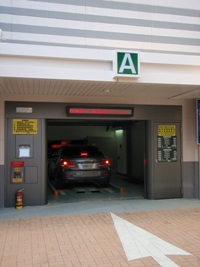
Cars parked are moved to their computer-assigned parking space on a pallet. The customer simply drives into the garage into a well-lighted manned area and parks in one of several bays, on a steel pallet, following simple instructions. The car is then whisked away and stored in a totally secure bay.
The latest tower car park project, in Taipei, has one Unidrive SP AC drive, controlling the hoist motor lifting the car platform between the entry level and the various storage floors of the tower. The 37 KW AC drive operates in closed loop mode and was chosen for its superior torque performance at brake release and on stopping, giving a very smooth ride of the hoist throughout its cycle. Ryoko’s experience of the reliability of the drive over many installations and its stability when operating above the rated motor speed (up to 2200rpm – rated speed 1750 rpm) were further factors in its choice.
A further key factor in the selection of Unidrive SP is its flexibility of operation. It can be changed from closed loop to open mode in moments should the need arise, without the need for additional hardware or wiring. In the event of a failure of the encoder or a break in the feedback wiring, the operator is able to keep the car park in full service until the fault is fixed.
No special modules or additional PLCs are needed for the drive operation. All of the required functions are programmed directly into the drive itself, saving both space and cost. For example, the torque setting at brake release is set into the standard parameters. Start and destination is specified by the master PLC in terminal commands – no complex communications are needed.