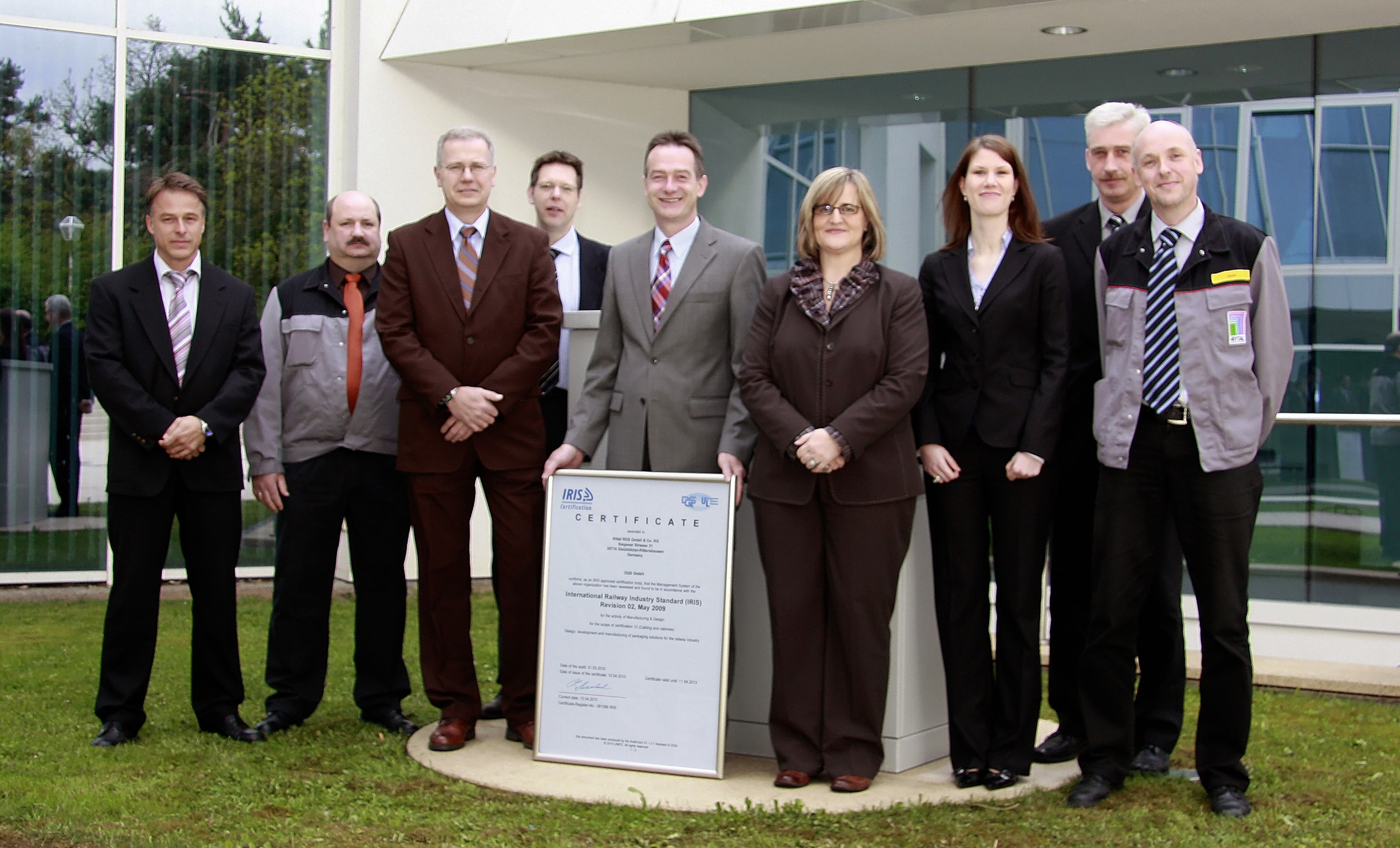
Rittal now has IRIS certification

For suppliers of rail technology, the IRIS quality standard is becoming increasingly important, as the major manufacturers increasingly require the certification for grade A suppliers. In April, Rittal's plant at Rittershausen successfully completed the extensive qualification process. This makes Rittal one of the few systems suppliers of enclosure and climate control technology to be certified to this demanding standard.

Rittal has been active for 15 years in rail technology, supplying all major vehicle manufacturers such as Siemens Mobility, Alstom Transport and Bombardier. The internationally recognized IRIS certification is a major prerequisite for participation in the growing rail technology market: Market researchers envisage sustainable growth for years to come, and at an annual rate of 4.5 percent until 2013. By then the worldwide market volume will be € 157 billion (source: SCI Transport, 2008 World Market Study).
IRIS - uniform international quality standard
The IRIS (International Railway industry Standard) quality standard was drawn up by European Rail Industry Association UNIFE and combines the widely used general quality requirements of the ISO 9001 with additional railway industry demands. The aim of IRIS certification is to create an international, uniform quality standard for all suppliers of the rail industry, making time-consuming mutual evaluations and audits superfluous. The standard is recognised by all major rail manufacturers and represents the most stringent current quality demand placed on supplier companies.
After a preparatory period of one and a half years, Rittal's plant in Rittershausen was granted the demanding IRIS certification on 15 April. This makes Rittal one of the few systems suppliers of enclosure and climate control technology that can boast this certification. During the preparatory period, 50 Rittal employees from different departments were given special training on rail-related topics. In addition, many work processes and a great deal of documentation was revised. Following a two-day audit by the independent Swiss Association for Quality and Management Systems (SQS), it was clear that the effort had been worth it: All the sectors audited had passed the test with very good results.